Therapy for Moms
Becoming a mother can be one of the most beautiful experiences — and one of the most emotionally and physically overwhelming. Joy and exhaustion. Gratitude and grief. Love and loss of identity. These opposite feelings can exist at the same time. That doesn’t mean you’re doing it wrong. It means you’re human.
I provide therapy for moms navigating pregnancy, postpartum, and the transition to motherhood. The perinatal period (from conception through the first year after birth) is a major emotional and neurological shift. It’s common to experience anxiety, mood changes, identity confusion, and heightened sensitivity during this time.
You might notice:
Rapid mood shifts
Sleep disruption
Increased worry
Changes in appetite or energy
Grief for your pre-motherhood self
Guilt for not “loving every minute”
Some emotional fluctuation is expected. But when distress feels persistent, intense, or isolating, it may be more than typical adjustment.


Baby Blues vs. Postpartum Mood & Anxiety Disorders (PMADs)
The Baby Blues affect approximately 60–80% of new mothers. They are caused by hormonal shifts and sleep deprivation and may include:
Tearfulness
Mood swings
Irritability
Fatigue
Baby blues typically peak 3–5 days after delivery and resolve within two weeks.
If symptoms last longer than two weeks, intensify, or interfere with daily functioning, it may indicate a Perinatal Mood or Anxiety Disorder (PMAD) such as postpartum depression or postpartum anxiety.
Signs of PMADs may include:
Depressed mood most of the day
Loss of interest or joy
Persistent anxiety or racing thoughts
Intrusive or unwanted thoughts
Irritability or rage followed by guilt
Withdrawal from support
Sleep disturbance (even when baby sleeps)
Feelings of worthlessness
Thoughts of death or self-harm
If you’re experiencing these symptoms, you are not alone — and this is treatable.
Birth Trauma & Maternal Mental Health
Birth trauma can significantly impact perinatal mental health. Trauma is not defined by what “should” have felt traumatic — it’s defined by how the experience affected you. Your feelings about your birth experience matter.
Learn more about the Birth Trauma Tree here
How Therapy Can Help
In our work together, we will:
Create a judgment-free, supportive space
Untangle overwhelming or conflicting emotions
Challenge unrealistic expectations of motherhood
Build coping skills that fit your life
Strengthen self-trust and parenting confidence
Develop a realistic plan for self-care and support
You deserve support during this transition. You don’t have to navigate pregnancy, postpartum, or motherhood alone.

-
![]()
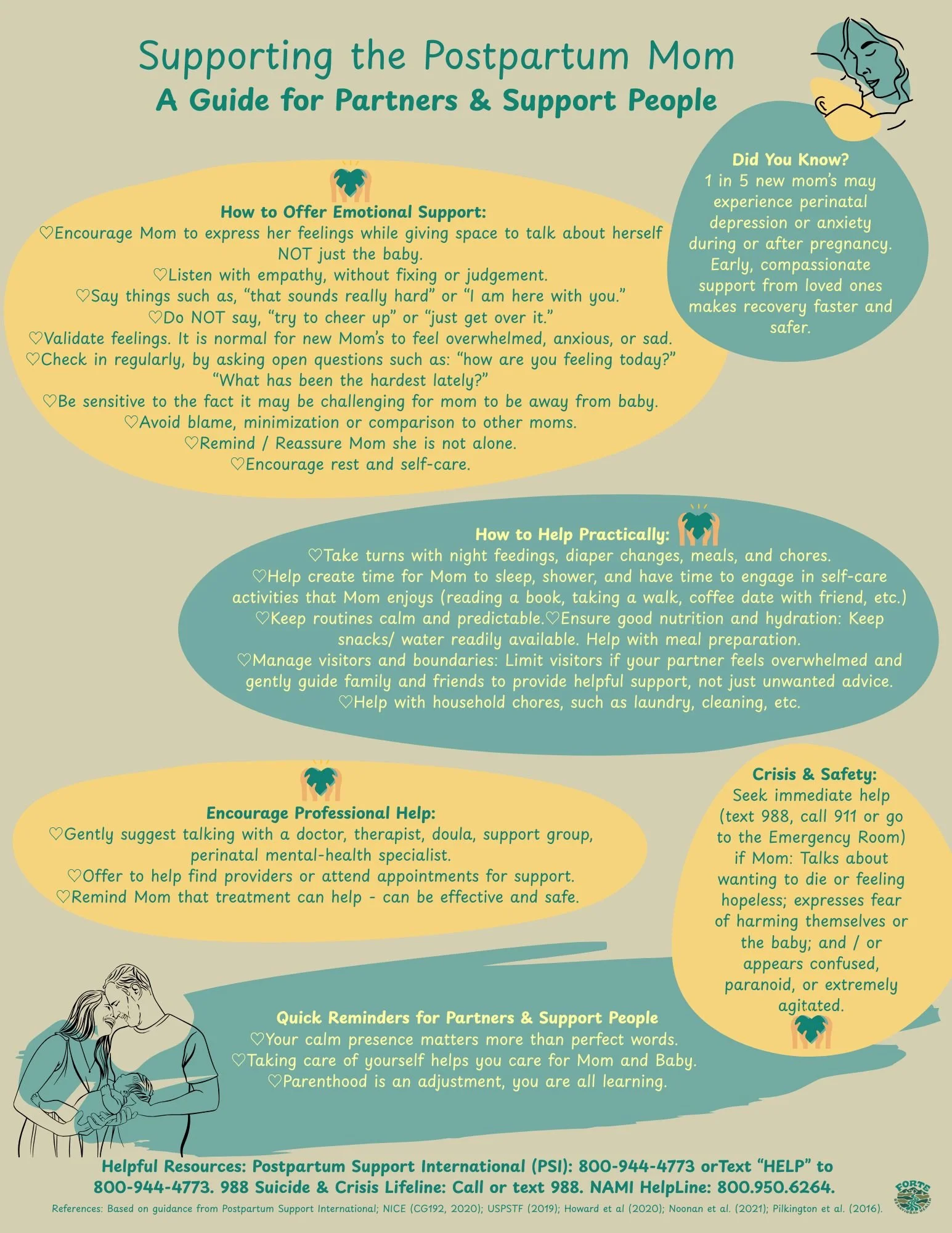
Supporting the Postpartum Mom: A Guide For Partners & Support People